Fireplace & firebox cleaning
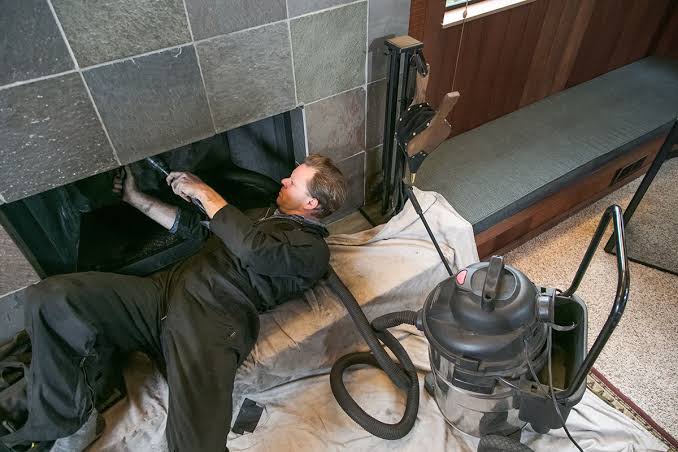
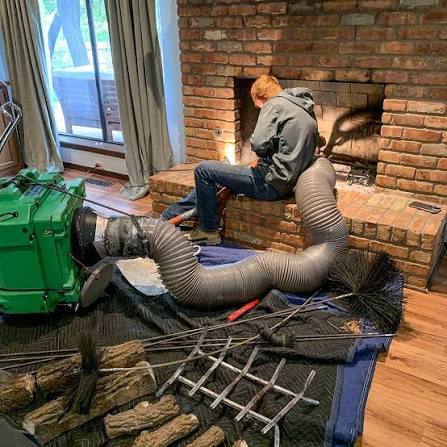
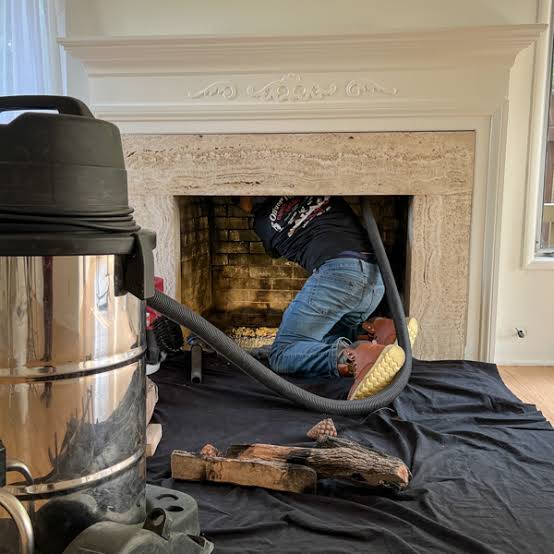
The part of the system you see every day. We clear ash and soot from the firebox and brush the walls and the area around the damper.
- Firebox walls and floor
- Damper and throat area
- Hearth left clean
What our chimney cleaning covers, how we look after different types of chimneys, and what you can do between visits to keep your fireplace working well.
Service categories
Most homes need a combination of these. During the walk-through we talk about which apply to your chimney.
The part of the system you see every day. We clear ash and soot from the firebox and brush the walls and the area around the damper.
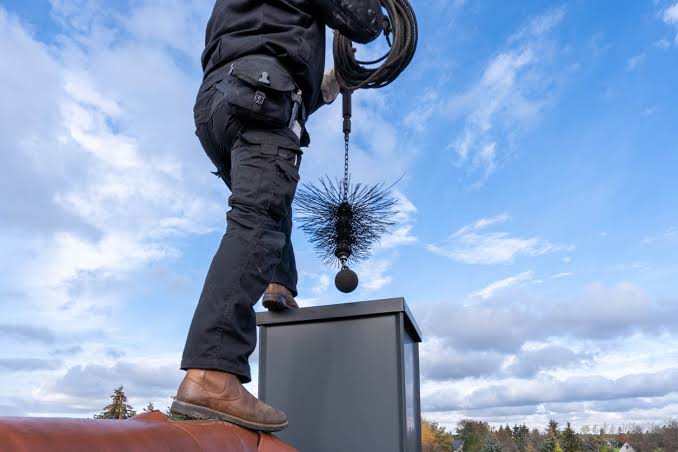
Brushing the inside of the flue from the firebox to the top, using brushes suited to the liner shape and material.
The sloped area above the damper collects heavy deposits that are easy to miss. We reach up and clean it by hand and by brush.
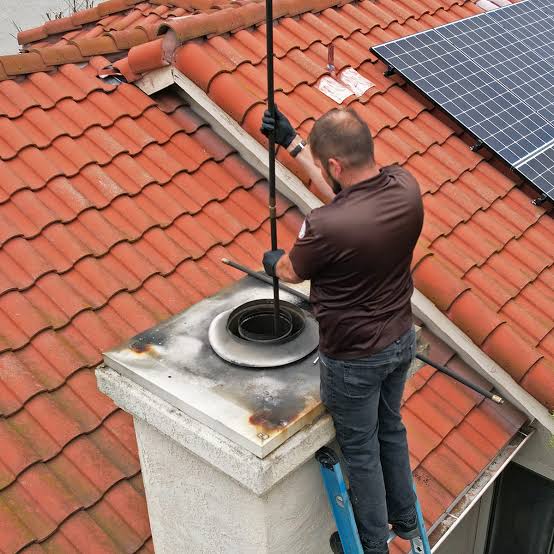
When roof access is safe, we look over the chimney cap, crown and flue opening for blockages such as nests or leaves.
Fireplace inserts and freestanding stoves have their own venting. We clean the connector and flue that serve them where they can be reached safely.
Depending on the flue, we use spinning rotary brushes, traditional rod-and-brush sweeping, or both together for heavier build-up.
Maintenance through the year
A widely followed rule of thumb is to have a chimney looked at once a year, and cleaned when deposits have built up. Here is how that fits around a burning season.
Warning signs
You do not need to wait for a set date. Any of these suggest it may be time for chimney cleaning or a closer look.
Useful customer information
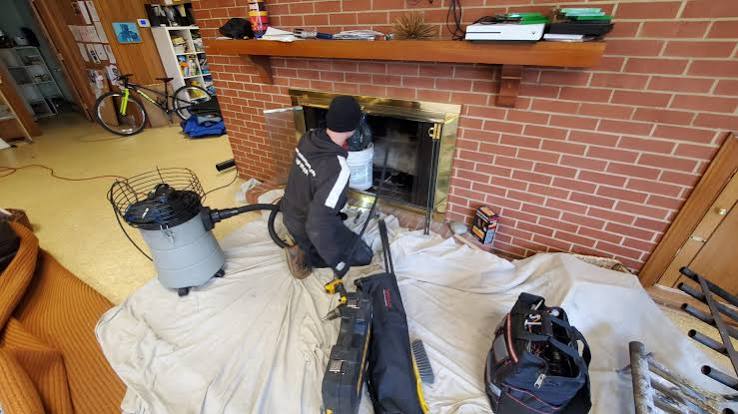
Please avoid using the fireplace or stove for at least a day beforehand so the firebox and flue are cool.
Move fragile items, rugs and furniture away from the hearth to give room for drop cloths and equipment.
Tell us about past repairs, chimney fires or problems you have noticed — it helps us focus on the right areas.
Keep pets in another room during the visit, and let us know about gates or any roof access details.
On the job


Questions
Creosote is the residue left when wood smoke cools and condenses on the inside of the flue. It can be powdery, flaky or hard and glossy, and all forms are combustible.
We cover the hearth and surrounding floor, seal the fireplace opening where possible and run vacuum extraction while brushing, so dust stays contained. We clean up the work area before leaving.
Not always. Some chimneys can be cleaned fully from inside. Others benefit from top-down sweeping or a look at the cap and crown, which we do only when roof access is safe.
Our focus is wood-burning fireplaces, stoves and inserts. If you have a gas appliance, mention it in your email and we will tell you whether it is something we can help with.
Email [email protected] with your address and a short description of your chimney, or see the Contact Us page for details.